Does Paying Only the Minimum Credit Card Due Affect Your CIBIL Score and Financial Health?
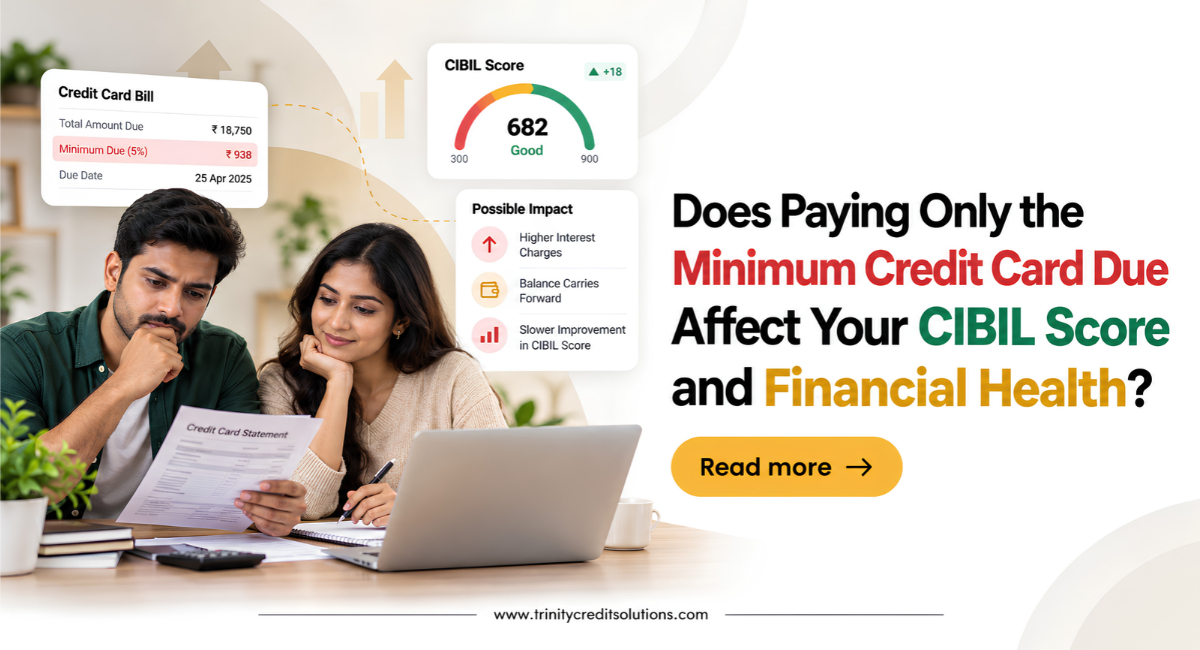
Table of content
- Introduction
- What Is the Minimum Amount Due on a Credit Card?
- Does Paying the Minimum Credit Card Due Affect Your CIBIL Score?
- What Happens If You Pay Only the Minimum Amount Due?
- How Credit Card Interest Increases Your Outstanding Balance
- How High Credit Utilisation Affects Your Financial Health
- Minimum Payment vs Full Payment: Understanding the Difference
- How to Manage Credit Card Debt and Improve Your CIBIL Score
- Conclusion
- Frequently Asked Questions
Introduction
Credit cards make everyday payments easier. Whether you are shopping online, paying bills or handling an unexpected expense, they offer convenience when used carefully. But when the monthly statement arrives, paying the full amount may not always be easy. Many people choose to pay only the minimum amount due because it seems like a simple way to manage their expenses. However, this habit can slowly increase outstanding debt and create financial pressure.
Understanding the Minimum Credit Card Payment CIBIL Score relationship is important for anyone using a credit card regularly. Paying the minimum amount on time may help you avoid a missed payment, but it does not mean your finances are completely safe.
What Is the Minimum Amount Due on a Credit Card?
The minimum amount due is the smallest payment your credit card provider requires you to make by the payment deadline. It is usually a small part of your total outstanding bill. The exact amount depends on the bank's rules, previous dues, interest and other charges. For example, suppose your monthly credit card bill is ₹40,000 and the minimum amount due is ₹2,000. You can pay ₹2,000 by the due date instead of clearing the entire ₹40,000 immediately.
However, the remaining ₹38,000 does not disappear. It continues as an outstanding balance, and interest may apply. Paying the minimum amount on time generally prevents your account from being treated as overdue for that billing cycle. However, it does not protect you from interest charges. This is why understanding your credit card statement is important before deciding how much to pay.
Does Paying the Minimum Credit Card Due Affect Your CIBIL Score?
Many cardholders worry about whether paying only the minimum amount will reduce their credit score. The answer is that paying the required minimum on time does not automatically damage your CIBIL score. Your payment history is an important part of your credit profile. When you make the required payment before the deadline, you generally avoid a missed-payment record. However, paying only the minimum can leave a large outstanding balance on your card. This may increase your credit utilisation ratio, which can affect your credit score.
The Credit Card Debt Impact on CIBIL becomes more noticeable when outstanding balances remain high over several billing cycles. For example, someone who regularly uses most of their available credit limit may appear more dependent on borrowed money. Lenders may consider this when reviewing future loan applications. You can understand your credit position better through the Credit Health Checkup service offered by Trinity Credit Solutions.
What Happens If You Pay Only the Minimum Amount Due?
A common question is, What happens if I pay minimum amount due every month The immediate benefit is that you can avoid missing the required payment, provided it reaches the card issuer on time. However, several financial problems may develop if this becomes a regular habit. First, the unpaid amount continues into the next billing cycle. Interest may be charged on the outstanding balance.
Second, your available credit limit remains reduced until you repay more of the balance. Third, new purchases can make your debt grow further. For example, if you regularly pay only a small part of your monthly bill while continuing to use the card, the outstanding amount may remain high. Over time, managing these payments can become stressful. According to the Reserve Bank of India's credit card guidelines, card issuers must warn customers that repeated minimum payments can extend repayment over months or years.
How Credit Card Interest Increases Your Outstanding Balance
Understanding Credit card interest on outstanding balance is important because interest can make borrowing more expensive. When you do not pay the full statement amount by the due date, you generally lose the interest-free period on eligible transactions, subject to your card's terms. Interest may then be charged on unpaid amounts according to the issuer's calculation method.
Consider this simple example:
| Credit Card Details | Amount |
| Total credit card bill | ₹50,000 |
| Minimum payment made | ₹2,500 |
| Remaining balance | ₹47,500 |
| Illustrative monthly interest rate | 3% |
| One month's interest on ₹47,500 | ₹1,425 |
This is only a simplified example. Actual interest depends on transaction dates, payments, the applicable rate and the card issuer's rules. Taxes may also apply. If you continue making only minimum payments, more of your money may go towards interest instead of reducing the original debt. This can make repayment take much longer than expected.
How High Credit Utilisation Affects Your Financial Health
Your credit utilisation ratio shows how much of your available credit limit you are using. A High credit utilisation ratio may indicate that you depend heavily on credit cards to manage expenses. For example, suppose your credit card limit is ₹1 lakh and your outstanding balance is ₹80,000.
Your credit utilisation ratio is: ₹80,000 ÷ ₹1,00,000 × 100 = 80%
This means you are using 80% of your available credit. High utilisation can affect your credit profile even when you make payments on time. Many financial experts suggest keeping credit usage below 30% as a general guideline, although this is not a fixed rule or a guarantee of a higher score. Reducing outstanding balances can improve your credit utilisation and make your finances easier to manage. If you want to understand your credit report in detail, explore the Credit Analyzer service.
Minimum Payment vs Full Payment: Understanding the Difference
Paying the minimum amount and paying the full credit card bill can have very different financial results.
| Minimum Amount Payment | Full Bill Payment |
| Pays only the required minimum | Clears the complete statement amount |
| Leaves an outstanding balance | Clears the billed balance |
| Interest generally applies | Usually maintains interest-free benefits |
| Debt may continue for months | Helps prevent carried-forward debt |
| May keep credit usage high | Can reduce credit utilisation |
Paying the full statement amount by the due date is generally the better option when you can afford it. It helps you avoid unnecessary interest and reduces the risk of building long-term credit card debt. However, if you cannot pay the full bill, paying at least the minimum amount on time is better than missing the required payment. The important step is to reduce the remaining balance as soon as your finances allow.
How to Manage Credit Card Debt and Improve Your CIBIL Score
Managing credit card debt becomes easier when you follow a clear repayment plan. Start by reviewing your monthly statement. Check the total amount due, minimum payment, interest rate and payment deadline. Try to pay more than the minimum whenever possible. Even an additional payment can help reduce the outstanding balance. Avoid unnecessary purchases while you are clearing existing dues.
If you use multiple credit cards, prepare a monthly budget and decide how much you can repay without affecting essential expenses. You can prioritise higher-interest balances while continuing to meet the required payments on every account. Set payment reminders or enable automatic payments to avoid missing deadlines. Review your credit report regularly to identify incorrect information or unexpected outstanding amounts.
You can also explore the Individual Credit Report service to better understand your repayment history and credit position. Improving financial health takes consistency. Small changes in spending and repayment habits can make a meaningful difference over time.
Conclusion
Paying only the minimum credit card due may help you for a short time, but it can increase interest charges and make your debt harder to manage. Understanding the Minimum Credit Card Payment CIBIL Score relationship can help you make better financial decisions. Try to pay your full credit card bill whenever possible. If you cannot, pay at least the minimum on time and gradually clear the remaining balance.
Need help understanding your credit card debt and CIBIL score? Trinity Credit Solutions can help you understand your credit report and take steps to improve your credit health. Contact Us to know more and get guidance on managing your credit card debt.
Frequently Asked Questions
Can I improve my CIBIL score by clearing credit card debt?
Reducing outstanding balances may improve your credit utilisation and support your credit profile. The actual score change depends on several factors, including your repayment history.
What is a good credit utilisation ratio?
Keeping credit utilisation below 30% is a commonly suggested guideline. Lower utilisation may support a healthier credit profile, but no particular percentage guarantees a score.
Is paying the minimum amount better than missing a payment?
Yes. Paying at least the required minimum on time generally helps avoid overdue reporting and late payment charges. However, interest may still apply.
Will I be charged interest if I pay the minimum amount due?
Yes. Interest generally applies to the unpaid balance according to your credit card provider's terms and conditions.
Does paying only the minimum credit card due reduce my CIBIL score?
Not automatically. Paying the minimum amount on time generally avoids a missed-payment record. However, high outstanding balances may increase credit utilisation and affect your score.
Trinity